Station's of the Cros's Coloring Pages — Free Printable for Kids & Sunday School
Free printable Station's of the Cros's coloring pages for Sunday school, homeschool, and family devotionals. Multiple audience options available — toddler, preschool, kids, adults.
All pages
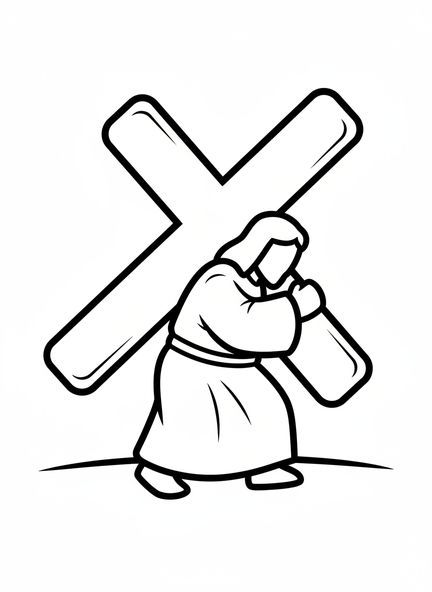
Stations Of The Cross Coloring Page for Toddlers
6 pages · free printable

Stations Of The Cross Coloring Page for Preschoolers
4 pages · free printable
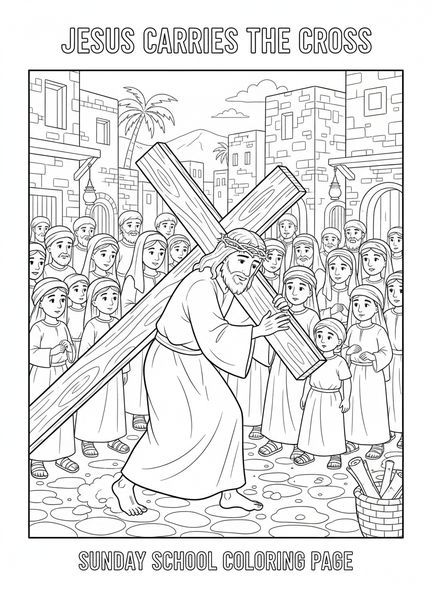
Stations Of The Cross Coloring Page for Sunday School
6 pages · free printable
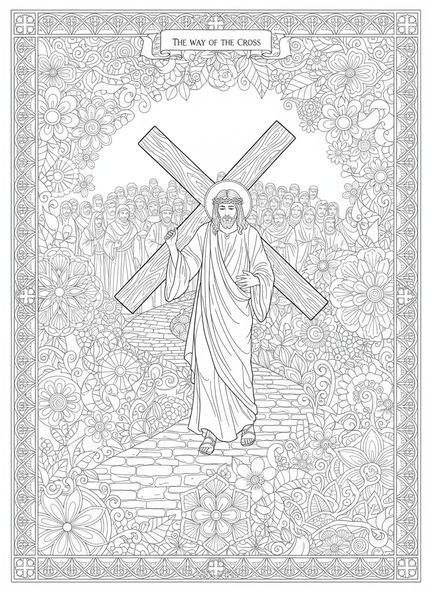
Stations Of The Cross Coloring Page for Adults
6 pages · free printable
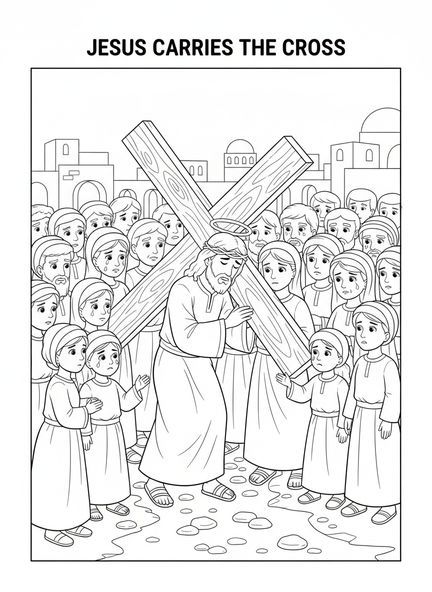
Stations Of The Cross Coloring Page for Kids
6 pages · free printable
Frequently Asked Questions
Are these Bible coloring pages really free?+
Yes — every Bible coloring page on this site is completely free to download, print, and use for personal, classroom, homeschool, and church purposes. No subscription, no email signup, no watermarks.
What format do I download?+
Each coloring page is available as a high-resolution PNG (2000×2000 pixels, A4 print-ready) and viewable on the page as a WebP image. Click the Download button to save the PNG to your device, or use the Print button to print directly from your browser.
Can I use these coloring pages in my church or Sunday school?+
Absolutely. Our free license permits classroom, Sunday school, VBS, and church-bulletin use, including making multiple copies for your students. The only restriction is that you may not resell or include them in a paid product.
Which age groups are these pages for?+
We offer variants for toddlers (ages 2–4), preschool (3–5), kindergarten (5–6), elementary kids (6–10), teens (11–17), and adults. Each leaf page is clearly labeled for an age range, with simpler or more detailed line art accordingly.
How often do you add new coloring pages?+
We publish new Bible coloring pages weekly, with seasonal collections (Christmas, Easter, VBS) refreshed every year before the holiday season. Subscribe to our newsletter to get new pages first.
Stations of the Cross coloring pages — the 14 (or 15) stations for Lent
The Stations of the Cross is one of the most ancient continuously-practiced Catholic devotions. Pilgrims to Jerusalem in the early centuries walked the Via Dolorosa — the route Jesus walked from Pilate's judgment to Calvary — stopping at significant points to pray and meditate. By the medieval period, Catholic churches in Europe began installing replicas of these stations inside their buildings, so Catholics who couldn't travel to the Holy Land could make the same prayerful walk symbolically.
This Stations of the Cross section holds our complete catalog: all 14 traditional stations plus the optional 15th station (the Resurrection, added by Pope John Paul II in some modern devotional forms). Each station is rendered with the iconographic conventions established in centuries of Catholic art, and our preschool tier offers a modified set with the most violent imagery softened.
The 14 traditional Stations
The 14 stations follow the events from Pilate's judgment hall to the burial of Jesus:
Station 1 — Jesus is condemned to death
Pilate sentences Jesus. Based on Matthew 27:11-26, Mark 15:1-15, Luke 23:1-25, John 18:28-19:16.
Station 2 — Jesus carries his cross
Jesus accepts the cross. Based on John 19:17.
Station 3 — Jesus falls the first time
Traditional, not directly in scripture. Catholic devotion holds that Jesus fell three times under the weight of the cross.
Station 4 — Jesus meets his mother
Mary encounters Jesus on the road to Calvary. Traditional, drawing on the broader Marian Passion narrative.
Station 5 — Simon of Cyrene helps Jesus carry the cross
Based on Matthew 27:32, Mark 15:21, Luke 23:26.
Station 6 — Veronica wipes the face of Jesus
Traditional. The cloth (the "Veil of Veronica") becomes a central relic in Catholic tradition. Veronica's name itself derives from vera icon ("true image").
Station 7 — Jesus falls the second time
Traditional, parallel to Station 3.
Station 8 — Jesus meets the women of Jerusalem
Based on Luke 23:27-31, "Daughters of Jerusalem, do not weep for me."
Station 9 — Jesus falls the third time
Traditional, parallel to Stations 3 and 7.
Station 10 — Jesus is stripped of his garments
Based on Matthew 27:35, Mark 15:24, Luke 23:34, John 19:23-24.
Station 11 — Jesus is nailed to the cross
Based on Matthew 27:35, Mark 15:24, Luke 23:33, John 19:18.
Station 12 — Jesus dies on the cross
Based on Matthew 27:50, Mark 15:37, Luke 23:46, John 19:30. "Father, into your hands I commend my spirit."
Station 13 — Jesus is taken down from the cross
Based on Matthew 27:57-59, Mark 15:42-46, Luke 23:50-53, John 19:38. The Pieta — Mary holding the body of Jesus.
Station 14 — Jesus is laid in the tomb
Based on Matthew 27:59-66, Mark 15:46-47, Luke 23:53-56, John 19:41-42.
Optional Station 15 — The Resurrection
Added in some modern devotional forms, particularly the "Scriptural Stations of the Cross" promulgated by Pope John Paul II in 1991. This optional fifteenth station moves the devotion past Good Friday into Easter morning.
When the Stations are prayed
The Stations of the Cross is associated primarily with:
Lent (Ash Wednesday through Good Friday)
The most common time. Most Catholic parishes pray the Stations on Friday evenings during Lent — a 30-45 minute service walking through all 14 stations with scripture readings, traditional prayers, and hymns.
Good Friday itself
Many parishes pray the Stations as part of the Good Friday afternoon liturgy or as a separate Good Friday devotion.
Individual devotion year-round
Catholics can pray the Stations any time. Many older Catholics pray them weekly throughout the year, particularly on Fridays.
Family workflow with the Stations of the Cross coloring pages
For Catholic families teaching children the Stations during Lent:
Week 1 of Lent (Ash Wednesday week)
- Read the Lenten introduction and prayer of the Stations
- Color Station 1 and Station 2
- Discussion: "What does it mean that Jesus accepted suffering for us?"
Week 2
- Read the entrance prayer and walking prayer
- Color Stations 3, 4, 5
- Discussion: "Simon was made to carry the cross. When have you helped someone carry their burden?"
Week 3
- Color Stations 6, 7, 8
- Discussion: "Veronica showed compassion. What's one act of compassion you can do this week?"
Week 4
- Color Stations 9, 10, 11
- Discussion: "Jesus was treated cruelly. How do we respond to people who treat us unfairly?"
Week 5
- Color Stations 12, 13, 14
- Discussion: "Jesus died for us. What does it mean to receive that love?"
Holy Week
- Review all 14 stations
- On Good Friday: family Stations of the Cross devotion — read each prayer, look at each colored station, walk symbolically through the journey
By Easter, the child has a complete 14-page Stations bundle as a take-home keepsake from their Lenten devotion.
Age-appropriate handling of Stations imagery
The Stations of the Cross contain significant violence imagery — the scourging, the crowning with thorns, the nailing, the death. Our age-tier policy:
Preschool (ages 3-5)
We do not publish a full Stations bundle for preschool. The Crucifixion-focused stations are not developmentally appropriate. For preschool Lent devotion, we recommend the simplified Easter journey from Palm Sunday → Last Supper → resurrection morning, skipping the Passion stations.
Kids (ages 6-10)
Full 14-station bundle available, with the most graphic violence imagery softened. The nailing (Station 11) shows Jesus on the cross without showing the actual hammering. The stripping (Station 10) shows Jesus' tunic being taken without revealing imagery. Wounds are present but not gratuitous.
Teens (ages 11-14)
Full intricate Stations available. Teens engage with the theological weight of the Passion and benefit from imagery that doesn't sanitize what happened.
Adults
Full Stations available, including the traditional Catholic art conventions (the Pieta with detailed wound imagery, the seven sorrows of Mary, etc.) for adult Lenten devotional use.
The Scriptural Stations (alternative form)
In 1991, Pope John Paul II introduced an alternative form of the Stations called the "Scriptural Way of the Cross" or "Stations of the Cross According to the Bible." This form uses only stations explicitly recorded in scripture, replacing the traditional non-scriptural stations (Veronica, the three falls) with scripturally-explicit moments (the Garden of Gethsemane, Peter's denial, the promise of paradise to the good thief).
We publish both formats:
- Traditional 14 Stations — the medieval-Roman form used in most Catholic parishes
- Scriptural Stations — the post-1991 alternative form
Catholic parishes can choose which form to use. We don't take a position on which is preferable; the traditional form is more common, the scriptural form is sometimes preferred for ecumenical contexts where Protestant participants are uncomfortable with the non-scriptural traditional stations.
Iconographic conventions in our Stations art
Centuries of Catholic Stations of the Cross artwork has established consistent visual conventions. Our pages follow these conventions:
Jesus' depiction
- Hair: long and dark, in the style of Middle Eastern men in the first century
- Clothing: white or off-white tunic, with the robe of mockery (purple/red) appearing in Stations 1-2
- Crown of thorns: appears in Stations 3-12 (after the crowning at the Praetorium)
- The cross: dark wood, typically rough-hewn
Mary's depiction
- Clothing: blue mantle, white veil (the traditional Marian color scheme)
- Posture: often kneeling or bowed in grief, particularly in Stations 4 and 13
Roman soldiers
- Roman military dress consistent with first-century Roman occupation force in Judea
- Helmets, short tunics, lorica segmentata armor for senior officers
Setting
- The route follows the contemporary scholarly reconstruction of the Via Dolorosa in Jerusalem
- Architecture is consistent with first-century Herodian-era Jerusalem (large stone blocks, narrow streets, market areas)
Editorial standards for Stations content
Standard editorial policy applies. Stations-specific notes:
Theological precision
The Stations represent specific theological claims (Christ's suffering for our redemption, Mary's role as co-suffering, the Roman judicial process). We follow the Catechism of the Catholic Church on these.
Historical accuracy
The Roman judicial process, the route through Jerusalem, the first-century Jewish-Roman conflict context — these are depicted with historical accuracy informed by current biblical archaeology and Roman historical scholarship.
Reverence
The Stations are a serious devotional practice. We don't introduce levity or cartoonish stylization. Even kids-tier pages maintain the dignity of the subject.
What's coming next for Stations content
Publishing priorities over the next 90 days:
- The Way of the Cross prayer cards — printable take-home cards with the traditional prayer for each station
- Scriptural Stations in Spanish — for Latin American Catholic families
- The Seven Sorrows of Mary — companion Marian devotion paralleling the Stations
- Holy Hour bundles — Holy Thursday and Good Friday extended devotion materials
- Children's Way of the Cross — simplified preschool-friendly alternative for younger families
If your parish wants a specific Stations format covered, email us.
Related Catholic and Easter content
- Catholic mega hub — full Catholic catalog
- Catholic sacraments — Holy Thursday Eucharist
- Rosary mysteries — Sorrowful mysteries pair
- Easter Bible coloring pages — Holy Week complete
- Lent calendar — 40-day Lenten devotional
- Cross symbol — central Stations imagery
— Sarah Mitchell, Christian Education Editor