Mary Magdalene Coloring Pages — Free Printable
Free Mary Magdalene coloring pages — first witness to the Resurrection of Jesus, beloved disciple.
All Mary Magdalene coloring pages (10)
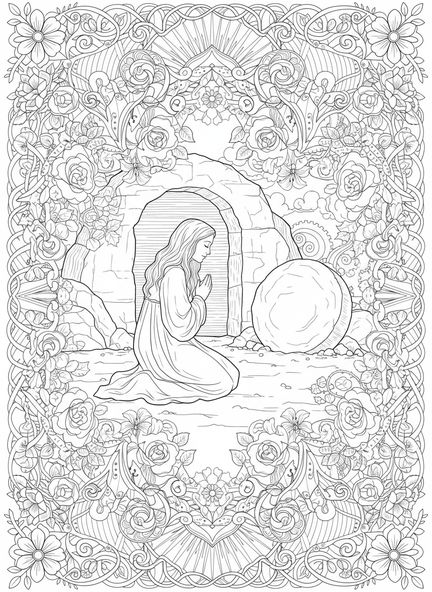
St Mary Magdalene Coloring Page for Adults
6 pages · free printable
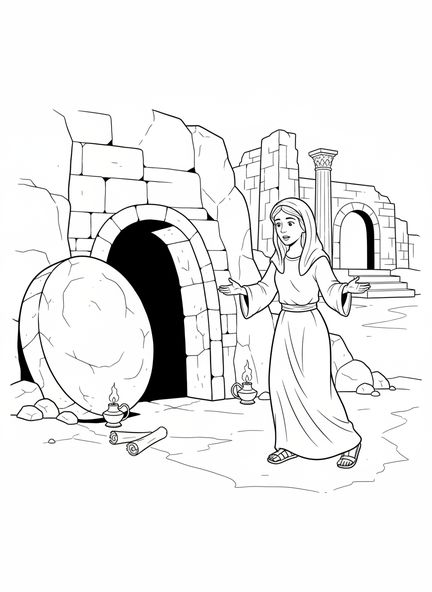
St Mary Magdalene Coloring Page Sunday School
6 pages · free printable
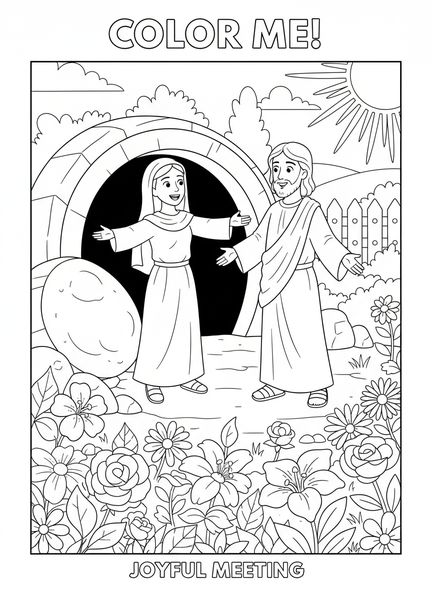
St Mary Magdalene Coloring Page for Kids
6 pages · free printable
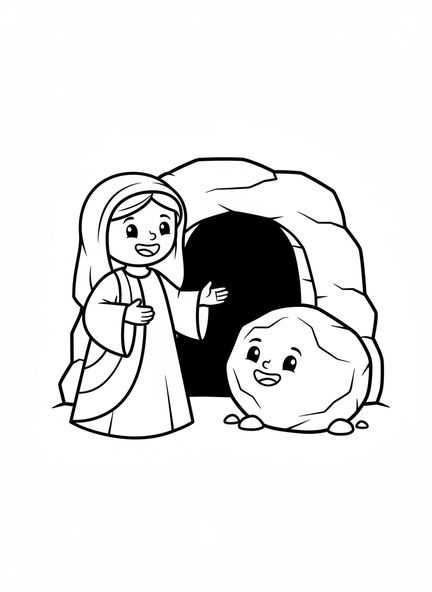
Mary Magdalene Coloring Page for Preschoolers
5 pages · free printable
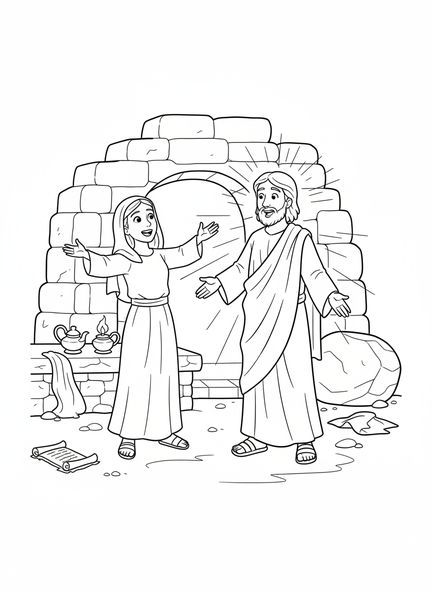
Empty Tomb Jesus Appearing Mary Magdalene Coloring Page for Sunday School
3 pages · free printable
Empty Tomb Jesus Appearing Mary Magdalene Coloring Page for Adults
6 pages · free printable
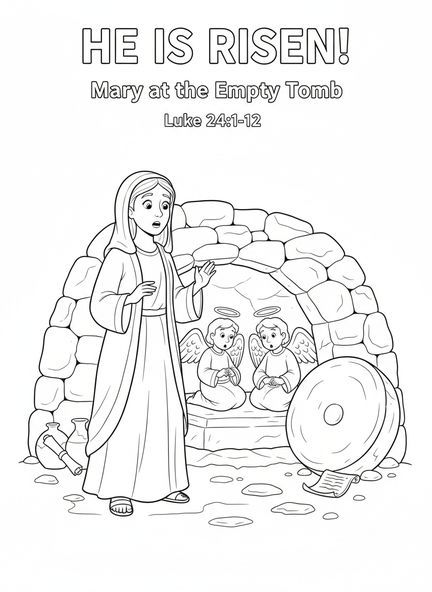
Mary Magdalene Coloring Page for Sunday School
4 pages · free printable
Mary Magdalene Coloring Page for Adults
6 pages · free printable
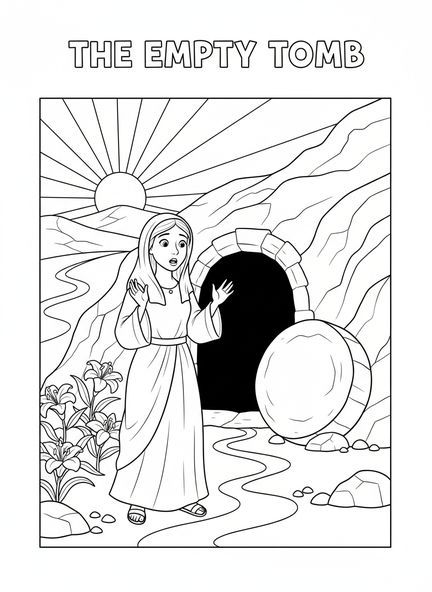
Empty Tomb Jesus Appearing Mary Magdalene Coloring Page for Kids
6 pages · free printable
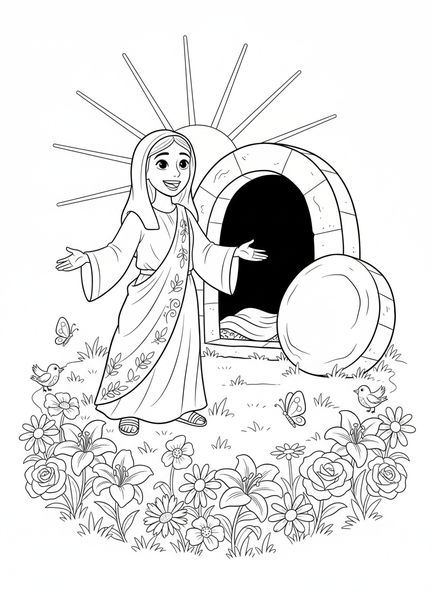
Mary Magdalene Coloring Page for Kids
6 pages · free printable
Frequently Asked Questions
Are these Bible coloring pages really free?+
Yes — every Bible coloring page on this site is completely free to download, print, and use for personal, classroom, homeschool, and church purposes. No subscription, no email signup, no watermarks.
What format do I download?+
Each coloring page is available as a high-resolution PNG (2000×2000 pixels, A4 print-ready) and viewable on the page as a WebP image. Click the Download button to save the PNG to your device, or use the Print button to print directly from your browser.
Can I use these coloring pages in my church or Sunday school?+
Absolutely. Our free license permits classroom, Sunday school, VBS, and church-bulletin use, including making multiple copies for your students. The only restriction is that you may not resell or include them in a paid product.
Which age groups are these pages for?+
We offer variants for toddlers (ages 2–4), preschool (3–5), kindergarten (5–6), elementary kids (6–10), teens (11–17), and adults. Each leaf page is clearly labeled for an age range, with simpler or more detailed line art accordingly.
How often do you add new coloring pages?+
We publish new Bible coloring pages weekly, with seasonal collections (Christmas, Easter, VBS) refreshed every year before the holiday season. Subscribe to our newsletter to get new pages first.
Mary Magdalene coloring pages — first witness to the Resurrection
Mary Magdalene is named more than any other woman in the gospels apart from Mary the mother of Jesus. She is identified by the gospel writers as the disciple from whom Jesus cast out seven demons, the woman who supported his ministry financially (Luke 8:1-3), one of the women who stayed at the cross when most of the male disciples had fled, the first witness to the empty tomb, and the first person to whom the risen Jesus appeared and spoke. For many in the early church, she carried the title "Apostle to the Apostles" — the one who first brought the resurrection news to the eleven.
This Mary Magdalene section holds every page on the site depicting Mary of Magdala, with particular focus on her central role in the resurrection narrative.
The major Mary Magdalene scenes
Galilean ministry
- Jesus heals Mary Magdalene (Luke 8:2, Mark 16:9) — seven demons cast out
- Mary Magdalene among the women supporting Jesus (Luke 8:1-3) — financial support
- Mary Magdalene at the wedding at Cana (traditional) — sometimes depicted, though not explicit in John's account
The Passion
- Mary Magdalene at the foot of the cross (John 19:25, Matthew 27:55-56, Mark 15:40-41) — one of the women who stayed
- Mary Magdalene at the burial (Matthew 27:61, Mark 15:47, Luke 23:55) — watching where Jesus was laid
The Resurrection
- The women arriving at the tomb (Matthew 28:1, Mark 16:1-2, Luke 24:1-3, John 20:1) — early Sunday morning
- The empty tomb (Matthew 28:5-7, Mark 16:5-7, Luke 24:4-8, John 20:11-13) — the angel's announcement
- Mary Magdalene meeting the risen Jesus (John 20:11-18) — the most-illustrated Mary Magdalene scene — "Rabboni!" — the moment of recognition
- Mary Magdalene announcing the resurrection to the apostles (John 20:18) — "I have seen the Lord"
Why Mary Magdalene matters for women's ministry
In an era of growing emphasis on women in Christian leadership and discipleship, Mary Magdalene has become a focal figure across traditions:
For Catholic women's groups
Pope Francis elevated Mary Magdalene's feast day from a memorial to a feast in 2016 — the same rank as the male apostles — explicitly to honor her as "Apostle of the Apostles." Catholic women's retreats increasingly feature her as a central figure.
For Protestant women's Bible study
Mary Magdalene's transformation from broken woman (the seven demons) to faithful disciple to first witness becomes a powerful narrative arc for women's Bible study. Her loyalty at the cross (when most male disciples fled) and her commissioning at the resurrection give her unique standing.
For evangelical leadership conversations
The role of women in church leadership is contested in evangelical circles. Mary Magdalene's commission to "go and tell" (John 20:17-18) is increasingly cited as biblical warrant for women's preaching and teaching ministries.
Mary Magdalene workflow for adult Bible study
For women's Bible study groups doing a Mary Magdalene unit:
Session 1 — Healing and discipleship
- Read Luke 8:1-3 and Mark 16:9
- Color the early discipleship scene
- Discussion: "What does it mean that Jesus healed Mary before calling her? How does healing prepare us for following?"
Session 2 — At the cross
- Read John 19:25-27 and Matthew 27:55-61
- Color the foot-of-cross scene
- Discussion: "Mary stayed when most disciples fled. What enables some people to stay when others run?"
Session 3 — At the tomb
- Read John 20:1-18
- Color the empty tomb scene
- Discussion: "Mary recognized Jesus when he said her name. When has Jesus 'said your name' in your life?"
Session 4 — Apostle to the Apostles
- Read John 20:17-18
- Color the announcement scene
- Discussion: "Mary's first job was to go and tell. What are we called to go and tell?"
This 4-session Mary Magdalene unit gives women substantive engagement with one of the most consequential female figures in the New Testament.
Correcting the historical misidentification
For centuries, Mary Magdalene was conflated with two other women in the gospels: the "sinful woman" who anointed Jesus' feet at the Pharisee's house (Luke 7:36-50), and Mary of Bethany (Lazarus' sister, John 11). This conflation became dominant in Western Christianity after Pope Gregory the Great's 591 sermon identifying all three women as one person. The conflation led to the misidentification of Mary Magdalene as a former prostitute — a characterization with no biblical basis.
Modern Catholic scholarship (since the 1969 revision of the Roman Calendar) and Protestant scholarship both treat Mary Magdalene as a distinct woman from the sinful woman and from Mary of Bethany. The seven demons (Luke 8:2) suggest she suffered from spiritual or physical affliction, not from sexual sin.
Our editorial approach: Mary Magdalene is depicted as the woman the gospels actually describe — a faithful disciple, financial supporter, and witness to the Resurrection. We don't depict her as a former prostitute (a misidentification), and we don't depict her wedding to Jesus or other extracanonical traditions from the Gnostic gospels and modern speculative fiction.
Editorial standards for Mary Magdalene content
Standard editorial policy applies. Three Mary Magdalene-specific notes:
Biblical accuracy
We follow only the canonical gospel accounts of Mary Magdalene. The Gnostic Gospel of Mary and similar non-canonical texts are not used as sources. The dominant traditional Western misidentification (as the sinful woman of Luke 7) is corrected, not perpetuated.
Iconographic conventions
- Long hair, sometimes red in Western Catholic tradition (the red hair is iconographic, not historical)
- Holding an alabaster jar (drawn from the anointing-woman conflation, now sometimes preserved as iconographic shorthand for "anointing of bodies")
- Penitent posture in Western Catholic tradition (the Magdalene as the model penitent — though this draws from the conflation that has been corrected)
- Eastern Orthodox depiction — holding a red egg (from the tradition of Mary Magdalene presenting an egg to Emperor Tiberius that turned red, symbolizing the Resurrection)
We provide both Western and Eastern iconographic options on adult devotional pages, with appropriate context for each.
Feast day
- July 22 — universal in both Western and Eastern Christianity
- Elevated to "feast" rank in the Catholic Church in 2016
Catholic vs Protestant Mary Magdalene
Both traditions affirm her importance. Catholic tradition celebrates her as a saint with a major feast day. Protestant tradition focuses on her as a model disciple and first witness, without the formal sainthood framework.
What's coming next for Mary Magdalene content
Publishing priorities:
- The four post-Resurrection witness scenes — Mary Magdalene at the tomb, with the angel, recognizing Jesus, announcing
- The women supporting Jesus' ministry bundle — Mary Magdalene, Joanna, Susanna, others
- Saint Mary Magdalene Catholic devotional bundle — for the July 22 feast day
- Mary Magdalene in art history — adult contemplative pages drawing on Caravaggio, Donatello, others
If you're teaching a Mary Magdalene unit, email us.
Related Bible characters and themes
- All Bible characters — browse 30+ figures
- Mary, Mother of Jesus — also at the foot of the cross
- Peter — fellow disciple, raced with John to the empty tomb
- Jesus Christ — whom Mary first saw risen
- Easter Bible coloring pages — Easter Sunday narrative
- Empty tomb scene — Mary's central scene
— Sarah Mitchell, Christian Education Editor